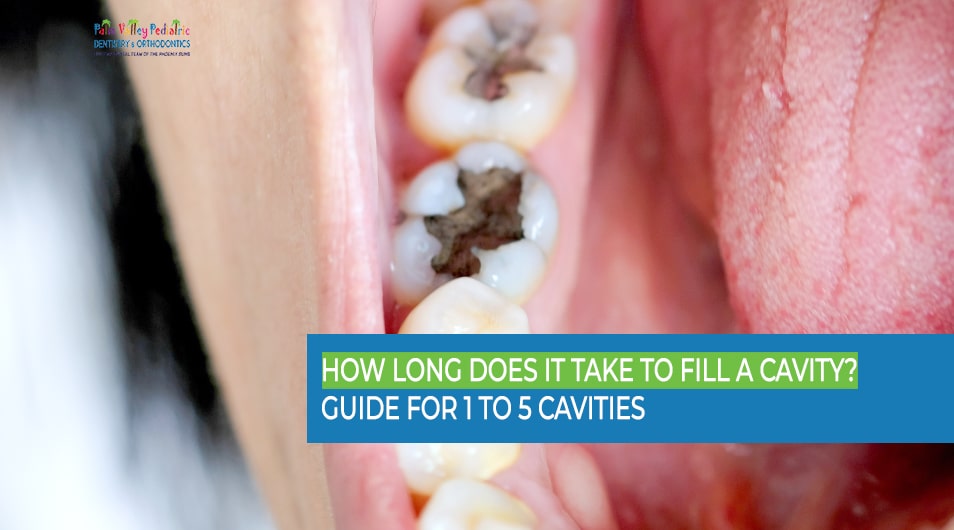
How Long Does It Take to Fill a Cavity? (FAQs Answered)
Filling one cavity usually takes 30 to 60 minutes. However, the duration may increase with multiple cavities or a deeper cavity.
After your dentist informs you that you need a filling (or five), you likely have some questions: “Will it hurt?” “Can I get them all done in one go?” “How long do fillings last?” Don’t worry—we answer all those questions in this easy and clear guide.
What Is the Duration for Cavity Filling?
The duration required to fill a cavity varies based on its size, depth, and location in your mouth.
Small cavity (20–30 minutes)
This type of cavity is usually on the tooth’s surface and hasn’t reached the deeper layers. It takes the least time to fill because the dentist only needs to clean a small area and add a thin filling layer.
These are common when the cavity is caught early, during a routine check-up.
Medium cavity (30–45 minutes)
A medium-sized cavity goes a bit deeper into the tooth enamel or dentin (the layer under the enamel). This type takes more time to clean and shape before the dentist adds the filling.
The dentist also needs to be extra careful with how the tooth is rebuilt to match your bite.
Large or deep cavity (Up to 60 minutes)
A deeper cavity may reach close to the nerve or affect more than one tooth surface. These fillings take longer because they involve more dental cleaning, shaping, and may even need a protective layer inside (like a liner) before the filling is placed.
The dentist must ensure the tooth stays strong and doesn’t cause pain later.
If you have a tiny cavity that your dentist finds during a routine check-up, let’s say on the back of a molar, and it’s only on the surface, your dentist can likely:
- Numb the area,
- Clean the decay,
- Place the filling,
- And polish it, all in under 30 minutes.
But if the cavity is deeper or in a tricky spot (like between two teeth), it may take closer to 45 to 60 minutes.
Even with deeper cavities, most single-tooth fillings are completed in one visit and usually take less than an hour.
Dentist Tip:
Your dentist may prioritize the most serious cavities first and schedule another visit for the rest, especially if they are in different parts of your mouth.
What Happens During a Cavity Filling?
Here’s the step-by-step process:
Numbing
Your dentist will use a local anesthetic to numb the surrounding tissue. This makes the procedure painless.
Cleaning the Cavity
A dental drill or laser removes the decaying section of your tooth.
Filling the Tooth
The dentist places filling material (composite resin, amalgam, or other types) into the cleaned space and shapes it to match your bite.
Hardening and Polishing
The filling is hardened with a special light and polished till it feels smooth in your mouth.
The majority of patients find the entire process to be quick and comfortable.
Does Filling a Cavity Hurt?
No, filling a cavity doesn’t hurt. Most patients do not feel anything during the surgery when they are under anesthesia. You may feel:
- Some pressure
- Mild sensitivity afterward
This will fade away in a day or two. In most cases, over-the-counter pain relievers such as ibuprofen are sufficient.
How long does it take for a filling to heal?
While your filling hardens immediately, the anesthetic might cause your mouth to feel numb for 2–3 hours.
Full recovery takes:
- 24–48 hours for any sensitivity to go away
- It may take a few days before your bite feels entirely normal.
Avoid sticky or hard foods on that side for the first day.
How Long Does a Tooth Filling Last?
The sort of filling you have and your oral hygiene determine how long it will last.
| Type of Filling | Lifespan |
| Composite (tooth-colored) | 5–10 years |
| Amalgam (silver) | 10–15 years |
| Gold | 15–30 years |
| Ceramic | 10–15 years |
Can a dentist fill a cavity on the same day?
Most dentists can fix cavities on the same day. If it’s found during your routine exam and isn’t too severe, the dentist may take care of it right away.
Let the clinic know ahead of time that you might need fillings. This helps them schedule enough time.
How Urgent Is Getting a Cavity Filled?
Cavities don’t go away on their own. Waiting can lead to:
- Bigger, deeper cavities
- Tooth infections
- Root canals or even extractions
Even if you are not in pain, getting your cavity filled early prevents more expensive and painful treatments later.
Final Thoughts
No matter how many cavities you have, 1, 3, or 5, modern dentistry makes the filling process easy, fast, and mostly pain-free. The time required varies depending on the size and number of cavities, but it is usually desirable to treat them as soon as possible.
Skipping a simple 30-minute filling today might turn into a painful root canal tomorrow.
Need a filling? Don’t wait. Get your smile back quickly and comfortably. Schedule your visit with Palm Valley Pediatric Dentistry, where your dental care is handled with expertise and care.
People Also Ask
Can I eat after getting a cavity filled?
Yes, although it is dependent on the sort of filling. If you had a composite (tooth-colored) filling, you can normally eat immediately away as the numbness wears off. However, for silver (amalgam) fillings, you should wait 24 hours before chewing on that side.
What happens if I fail to fill a cavity?
If not treated, a cavity might deepen, reach a nerve, and cause pain or infection. This could result in more complex procedures, such as root canals or even tooth extraction.
Are there any side effects to cavity fillings?
Most people do not have any side effects, although others may experience brief sensitivity or mild gum discomfort. These problems normally go away within a few days.
Is it safe to have many fillings in one visit?
Yes, many patients get 2–4 cavities filled in one visit. Your dentist will space them out if needed for comfort, especially if fillings are on opposite sides of your mouth.
Do cavity fillings weaken the tooth?
No, fillings are meant to restore the tooth’s strength. In fact, by removing decay and sealing the space, the filling prevents the tooth from getting weaker.